
January 19, 2026
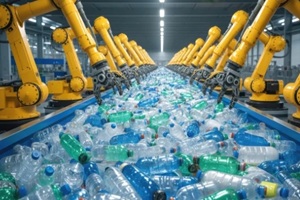
Manufacturers in the plastics sector are advancing their operations through automation that aligns with new demands for precision, efficiency, and sustainability.
Robotics integration has become a central part of this progress in plastic manufacturing, offering tangible benefits across production quality, labor strategy, and long-term operational strength.
Automation in plastics manufacturing has gained significant traction, reflected in a record-high global average of 162 robots per 10,000 employees. The trend showcases a broader shift in how companies are modernizing production to address workforce limitations, competitive pressure, and heightened customer expectations.
In 2023 alone, plastic molders installed 1,646 robots worldwide. While slightly below figures from previous years, the focus has become more targeted, prioritizing systems that provide measurable returns and long-term capability improvements.
Industry-wide, the adoption curve is accelerating, and this trend is not limited to large manufacturers. Small- and mid-sized processors are contributing to the broader uptick, enabled by new access to affordable and scalable solutions.
With labor shortages affecting nearly all segments of the supply chain, automation has moved from an optional upgrade to a necessary adaptation for maintaining output and meeting standards.
Robotics is playing a strategic role in modernizing plastics manufacturing operations through measurable improvements in efficiency and consistency.
Labor optimization is a leading factor in the adoption of robotics. Repetitive, physically demanding tasks, such as loading and unloading injection molding machines, are particularly well-suited to automation.
Robots deliver consistent performance, reduce fatigue-related errors, and enable skilled workers to focus on system oversight and quality management. Companies are finding that assigning people to more analytical or value-added functions helps maximize labor resources and supports better retention in a competitive hiring environment.
Robots also bring precision and repeatability to processes that are sensitive to timing and coordination. Improvements in part placement, cycle time stability, and secondary operations contribute to greater process control and fewer defects.
For companies with lean production goals, automation strengthens the ability to hit quality benchmarks without excessive rework or downtime.
The financial argument for robotics has become much more compelling in recent years. Many smaller processors are now reporting payback periods of under 12 months for certain automation investments, depending on the application and utilization rate.
The accelerated return is made possible by reduced scrap, higher throughput, and lower labor costs over time. Modular robotics platforms make it easier to begin with a focused investment, such as machine tending, and expand as savings and operational comfort increase.
Pay-per-use models, including robots-as-a-service, are helping businesses overcome the barrier of high upfront capital costs. These flexible financing options are particularly beneficial to companies operating under tight margins or uncertain demand forecasts.
Subscription-based automation allows processors to experiment with robotics, assess performance metrics, and make data-driven decisions about scaling up.

Building a successful robotics strategy involves more than just purchasing hardware; integration planning is essential.
The use of modular systems allows manufacturers to start with limited automation and expand as production scales, supporting a staged approach where companies can address their most pressing labor or quality challenges first, then gradually enhance other parts of the line.
Processors are also finding value in working with automation partners who offer localized support, shorter lead times, and options for customization. For smaller manufacturers, that type of hands-on collaboration is often a deciding factor in pursuing automation in the first place.
Investments in robotics increasingly intersect with broader digital transformation efforts, propelling companies of all sizes into the modern era of plastic manufacturing.
Robotic platforms often come equipped with AI-enabled features that enable systems to adjust dynamically to production variables.
These features, including motion feedback, vision-guided tasks, and self-optimization capabilities, translate into less wasted energy, more accurate part handling, and less wear on components.
Many systems incorporate digital twin functionality, creating real-time simulations of factory operations that support predictive maintenance and production forecasting. Processors are utilizing these tools to anticipate issues more effectively, optimize cycles, and gain a deeper knowledge of system behavior.
One of the more persistent misconceptions about robotics is that it displaces human jobs. However, companies often find that automation creates a need for skilled operators, technicians, and systems integrators.
Employees gain more sustainable and engaging roles by shifting the focus from manual repetition to equipment supervision and system analytics.
To better support this transition, manufacturers are investing in training programs to enhance their employees’ skills. Some collaborate with local technical colleges or universities to develop workforce pipelines. In contrast, others rely on equipment suppliers to provide in-house certification and onboarding resources.
The growing availability of intuitive user interfaces and drag-and-drop programming has further reduced the technical barrier, making it feasible for existing staff to manage automation without extensive retraining.
Manufacturers that adopt robotics are experiencing improvements in responsiveness, product consistency, and customer satisfaction. Factors such as real-time monitoring and connectivity make it easier to fine-tune operations and adapt quickly to changes in demand or regulatory requirements.
For companies with multi-location production or plans for regional expansion, robotics offers a standardized platform that supports consistent performance regardless of their respective geography. Companies now view rapid, accurate response as a baseline for competing, not an extra perk.
Companies are also using their automation strategy to differentiate themselves from customers and investors, highlighting data-driven operations and smart plastic manufacturing capabilities as indicators of long-term stability and innovation focus.
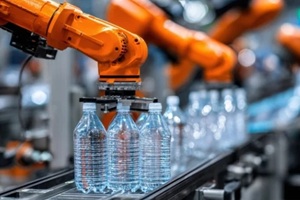
Robotics is actively reshaping the plastic manufacturing sector into one that is more adaptive, intelligent, and resilient. Automation is helping companies shorten production cycles, minimize physical strain on workers, and drive new efficiencies through advanced AI and data capabilities, enabling them to stay competitive in a changing market.
Consider joining PLASTICS, the Plastics Industry Association, to stay informed on the latest breakthroughs in sustainable plastics innovations. Membership provides access to economic research, regulatory updates, sustainability programs, and opportunities to contribute to industry-wide solutions. Members also gain access to NPE, the largest plastics trade show in the Americas, featuring over 1 million square feet of exhibits from more than 2,000 companies. Learn from industry leaders showcasing the latest innovations in plastics technology every three years. Visit npe.org for more information!
PLASTICS and the Future Leaders in Plastics (FLiP) Committee are devoted to supporting and encouraging the next generation of plastics leaders who will play a crucial role in the innovation, technology and future of the plastics industry. FLiP’s mission is to provide young professionals under the age of 40 the exposure, education and resources they need to build lifelong careers in plastics. Want to join? Want to get your employees involved? Email: flip@plasticsindustry.org
