
March 9, 2026

Recyclable plastic trays are becoming essential to modern food logistics, balancing operational efficiency with sustainability.
As industries adapt to new environmental expectations and automation technologies, the tray market is entering a phase of measurable expansion, supported by strong innovation and changing supply chain dynamics.
According to Future Markets Insights data, the U.S. stackable plastic tray market is expected to grow at a compound annual rate of 6.7% between 2025 and 2035, increasing from $853.9 million to more than $1.5 billion.
Manufacturers recognize these trays as valuable assets in reducing warehouse inefficiencies, supporting automated systems, and improving long-term durability across food distribution channels.
Polypropylene (PP) remains the leading material, with forecasts indicating it will account for nearly 45% of the global market by the end of 2025.
Its combination of high strength-to-weight ratio, recyclability, and chemical resistance makes it suitable for food processing environments where hygiene and consistency are essential. The material withstands frequent washing, resists temperature fluctuations, and maintains integrity during repeated use cycles.
PP trays have gained traction because they integrate seamlessly into automated systems, a growing necessity in high-volume logistics. Facilities adopting robotics and smart inventory management find that reusable trays reduce handling errors, reduce packaging waste, and provide long-term cost savings through lower replacement rates.
Food and beverage processors are projected to hold 35% of the stackable tray market by the end of 2025.
These trays enhance hygiene and storage management, directly influencing food safety outcomes. The ability to standardize tray sizes simplifies pallet stacking and inventory flow, while their modular design helps facilities adapt to fluctuating production demands.
Cold storage operations benefit from moisture-resistant plastics that preserve product quality through temperature-controlled supply chains.
Recyclable trays, along with features such as RFID tracking and barcode compatibility, help keep track of products and make logistics smoother from processing to delivery at stores.
A growing number of manufacturers are focusing on products that align with circular economy principles. The introduction of recyclable and reusable materials, combined with digital tracking features, transforms how food packaging integrates with environmental and operational objectives.
Manufacturers in Asia-Pacific, particularly in India, are adopting similar strategies through reusable tray systems and energy-efficient production methods. These developments indicate that sustainable design is becoming part of global best practice rather than a regional trend.
Despite growth, the market often experiences hurdles, including regulatory complexity, fluctuating resin costs, and uneven recycling infrastructure. Multi-layer tray designs complicate sorting and reprocessing, while regional recycling systems often differ in capacity and compliance standards.
Yet these pressures are encouraging innovation across the value chain. Many producers are transitioning to single-material formats that simplify recyclability, while others are collaborating with logistics partners to develop closed-loop tray return systems.
A comparison of leading regions highlights the active influence of policy and infrastructure development on market behavior:
| Region | Market Driver | Adoption Focus |
| United States | Automation in logistics and food processing | Returnable trays and conveyor-compatible molds |
| United Kingdom | Sustainability and reusable packaging mandates | Recycling-ready trays |
| European Union | Circular economy compliance | Closed-loop reuse systems |
| Asia-Pacific | Growth in automation and cold storage | Compact, durable tray designs |
The data reveals how local priorities shape adoption strategies, from environmental compliance in Europe to process automation in North America and Asia.
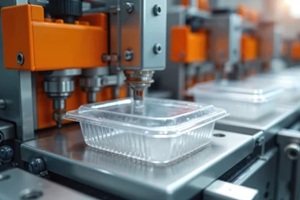
The intersection of technology and materials engineering is reshaping tray production and use. Lightweight polymers with embedded sensors and tracking tags are becoming more common, offering recyclability and data transparency.
These trays integrate with warehouse management software, allowing processors to monitor usage cycles and improve logistics coordination.
The combination of durable plastics and connected technologies positions recyclable trays as long-term infrastructure assets rather than disposable packaging, leveraging standout technologies including:
Growing environmental regulations are prompting greater attention to recycling infrastructure and reporting requirements. Manufacturers are adapting production lines to comply with shifting standards on factors including material content and end-of-life recovery.
Collaborative industry efforts are emerging to harmonize testing protocols and certification systems, promoting greater confidence among downstream users.
Organizations involved in food logistics can strengthen their position for the coming decade by focusing on several important areas, including
These measures promote economic efficiency and environmental responsibility, demonstrating that recyclable plastic trays offer value beyond packaging functionality.
Recyclable plastic trays represent a clear direction for food logistics: scalable efficiency supported by sustainability. As automation, recycling, and regulatory alignment converge, companies have an opportunity to redefine material management across the supply chain.
To stay informed on developments shaping the next generation of sustainable plastics, consider joining PLASTICS, the Plastics Industry Association. Membership provides access to recycling initiatives, market insights, and resources that help businesses strengthen their environmental and operational strategies while contributing to meaningful progress in the plastics industry.
PLASTICS and the Future Leaders in Plastics (FLiP) Committee are devoted to supporting and encouraging the next generation of plastics leaders who will play a crucial role in the innovation, technology and future of the plastics industry. FLiP’s mission is to provide young professionals under the age of 40 the exposure, education and resources they need to build lifelong careers in plastics. Want to join? Want to get your employees involved? Email: flip@plasticsindustry.org
