
February 9, 2026

The growing preference for stackable plastic trays is reshaping storage and logistics practices across multiple sectors. As industries seek ways to enhance efficiency, reduce waste, and align with sustainability goals, these trays are recognized for their versatility and long-term economic value.
Market projections indicate steady expansion, driven by advancements in automation, the push toward recyclable materials, and the operational advantages these trays deliver.
Stackable plastic trays are no longer viewed as simple storage components. They have become integral to modern logistics, supporting streamlined movement, efficient space utilization, and consistent handling performance across automated systems.
The U.S. market alone is expected to increase from approximately $853.9 million in 2025 to more than $1.5 billion by 2035, reflecting an annual growth rate exceeding 6%.
Industrial and manufacturing sectors are fueling much of this expansion. Warehouses, food processors, and pharmaceutical facilities seek storage solutions that maintain structural integrity under pressure and perform well in mechanized environments.
With the rise of robotics and smart inventory systems, trays that can reliably integrate into automated operations are now considered essential infrastructure. Their ability to stack securely and maintain stability during transit directly improves workflow efficiency and reduces material handling costs.
Polypropylene (PP) remains at the forefront of tray production due to its durability, chemical resistance, and recyclability. Holding a projected 45% market share by 2025,PP offers a combination of strength and lightweight properties that make it ideal for demanding applications.
Industries working with food, pharmaceuticals, and electronics rely on PP trays to maintain product safety while reducing wear on automated equipment.
Manufacturers appreciate PP’s alignment with circular economy objectives. Its recyclability supports corporate sustainability commitments while maintaining consistent performance under repeated use.
Many tray producers now incorporate recycled or bio-based PP materials to enhance environmental credentials without compromising durability. The shift toward reusable trays reduces waste and supports long-term sustainability initiatives across supply chains.
PP’s versatility allows manufacturers to design trays that meet specific operational requirements, from anti-static surfaces used in electronics to temperature-resistant options for cold storage.
Compatibility with robotic arms and automated conveyors further strengthens its position in high-volume industries seeking dependable, standardized packaging systems.
The food and beverage sector has emerged as a major adopter of stackable trays, accounting for roughly a third of global demand.
Producers value the trays’ ability to maintain hygiene standards, optimize space, and reduce the potential for contamination. Their modular form fits efficiently into storage racks and distribution systems, making them a practical choice for production and cold chain logistics.
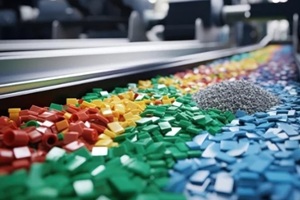
With automation becoming more sophisticated, trays designed for robotic or mechanical handling are now essential in fast-paced production settings. The ability to tolerate moisture, temperature changes, and frequent sanitation cycles allows these products to deliver consistent quality assurance while supporting productivity gains.
In an industry where safety and efficiency must coexist, stackable trays provide a reliable solution that aligns with regulatory compliance and operational goals.
Sustainability and innovation are shaping the next phase of the tray market. Companies are integrating technologies such as RFID and IoT sensors to enable real-time tracking and asset management. These features improve traceability, optimize inventory flow, and reduce losses throughout the distribution chain.
At the same time, the use of recyclable and biodegradable materials is expanding, reinforcing the plastics industry’s efforts to promote responsible production and recycling practices.
Industry programs encouraging closed-loop systems and standardized recycling infrastructure are gaining traction. These programs help manufacturers reduce their environmental footprint while improving cost efficiency.
The United States remains a focal point for tray adoption, with strong growth in logistics, retail distribution, and automated warehousing. Mold design innovations support returnable trays suited to conveyor systems and temperature-controlled transport, particularly for fresh food applications.
Across Europe, stricter regulations on packaging sustainability are pushing manufacturers to adopt recyclable plastic solutions. Initiatives in the United Kingdom, Germany, and Italy are advancing closed-loop models where trays are collected, cleaned, and reintroduced into the supply chain.
Meanwhile, Asian countries, including Japan and South Korea, emphasize automation and compact storage designs that cater to high-density urban operations. Emerging markets in India and Southeast Asia are following suit, with local manufacturers investing in energy-efficient production and reusable packaging systems.
Manufacturers will encounter ongoing challenges as raw material prices climb and recycling rules grow more intricate. Multi-layer trays, concerns about contamination, and uneven global recycling standards create additional pressure. However, these challenges are driving innovation.
Companies are refining product designs to simplify recycling, adopting mono-material solutions, and expanding modular options that meet varied sector requirements. By combining durable materials with innovative technology, the industry is transforming operational challenges into opportunities for improvement and differentiation.
Stackable plastic trays are emerging as a foundation for efficient, sustainable operations across manufacturing, logistics, and food processing. Lightweight polymers, improved recyclability, and integration with automated systems contribute to their growing importance.
As the market expands, the convergence of design innovation, digital technology, and sustainability initiatives will continue strengthening their role within modern supply chains.

Manufacturers, suppliers, and recyclers collectively demonstrate how plastic products can deliver performance and sustainability in equal measure. Industry collaboration will remain essential in advancing recycling infrastructure, promoting standardization, and highlighting plastic-based solutions’ economic and environmental advantages.
Join the Plastics Industry Association (PLASTICS) to remain informed on advancements in materials innovation, automation compatibility, and recycling initiatives shaping the future of plastics. Membership provides access to research insights, sustainability programs, and advocacy resources designed to help businesses strengthen operations while contributing to a more efficient and responsible plastics industry.
PLASTICS and the Future Leaders in Plastics (FLiP) Committee are devoted to supporting and encouraging the next generation of plastics leaders who will play a crucial role in the innovation, technology and future of the plastics industry. FLiP’s mission is to provide young professionals under the age of 40 the exposure, education and resources they need to build lifelong careers in plastics. Want to join? Want to get your employees involved? Email: flip@plasticsindustry.org
