
March 16, 2026

Increasing pressures surrounding sustainability in plastics continue to reshape how they are designed, produced, and evaluated across the entire supply chain. Executives increasingly seek approaches that lower environmental impact without disrupting proven manufacturing systems or material performance.
Blending renewable materials into everyday plastics has emerged as a practical strategy that aligns sustainability goals with operational realities, offering a pathway that complements recycling and supports long-term industry resilience.
| In This Article: We’re going to discuss how blending renewable content into conventional plastics supports sustainability, complements recycling systems, and delivers measurable progress without disrupting manufacturing performance or supply chains. |
Sustainability in plastics has become an increasingly important topic, along with the sustainability of other commonly used materials. Alternatives to plastic, such as paper, aluminum, or glass recycling, often have higher carbon footprints due to their energy-intensive production processes, making plastic the overall best option.
Hybrid plastics shift the conversation toward incremental improvement. Using renewable, plant-based materials blended with conventional plastics reduces reliance on fossil fuels while preserving the properties that make plastics essential for packaging, healthcare, transportation, and consumer products.
Progress is achievable without waiting for sweeping infrastructure changes or shifts in consumer behavior.
Renewable content is being integrated in ways that reinforce existing plastic systems rather than replace them.
Thoughtful blending strategies allow manufacturers to reduce fossil-based inputs while preserving established processes, supply chains, and performance expectations.
Hybrid formulations introduce renewable feedstocks into existing polymer systems rather than replacing them outright.
Production lines, molding equipment, and processing techniques typically remain unchanged, allowing manufacturers to test and scale blends with minimal disruption. Gradual integration supports data-driven decision-making around lifecycle impacts and performance outcomes.
The approach protects supply chain stability while also helping build market demand for renewable raw materials. Investment interest grows across agriculture, biomass processing, and logistics, strengthening domestic sourcing opportunities and encouraging innovation upstream.
Despite broader considerations, material performance remains a decisive factor in whether new solutions are adopted.
Hybrid plastics retain the strength, flexibility, durability, and barrier properties required for demanding applications. Important considerations such as food safety standards, shelf-life requirements, and regulatory compliance remain intact, reinforcing confidence for both brand owners and processors.
Hybrid plastics maintain the mechanical strength, flexibility, durability, and barrier performance needed for high-demand applications. A gradual adoption approach helps product lines pursue sustainability targets while maintaining performance and dependability.
Hybrid plastic solutions balance environmental improvement with the need for scalable, cost-conscious production.
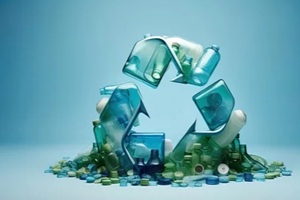
Replacing a portion of fossil-derived polymers lowers overall carbon intensity and reduces the risk of long-lived microplastic generation. These environmental benefits increase with production scale, rather than relying on ideal recycling conditions.
From an economic standpoint, hybrid approaches mitigate risk, prompting capital investments to concentrate on improving existing assets instead of replacing entire systems. Market acceptance builds gradually as performance data and sustainability metrics become available.
The comparison below highlights differences and trade-offs among various material approaches:
| Approach | Infrastructure Impact | Carbon Footprint | Performance Consistency |
| Conventional plastics | Established | Higher | High |
| Alternative materials | Significant changes | Often higher | Variable |
| Hybrid plastics | Minimal changes | Lower | High |
Across the market, adoption patterns show a shift toward solutions that combine progress with real-world feasibility.
Pilot programs enable companies to validate hybrid formulations in select product categories, generating insights that inform broader rollout decisions. Supply chain partners benefit from greater predictability, while regulators and customers benefit from greater transparency into sustainability improvements as they occur.
Consumer preferences are shifting toward products that show credible environmental responsibility while remaining easy to use and affordable. Hybrid plastics meet this expectation by offering visible, step-by-step progress rather than abstract or distant promises.
As standards, testing methods, and sustainability reporting systems mature, overall market readiness continues to strengthen. When collaboration extends from suppliers to end users, confidence in hybrid solutions grows faster.
Recycling remains an essential pillar of plastic sustainability, and hybrid materials complement rather than replace recycling systems.
Incorporating renewable content does not replace recycling, which remains essential to managing plastic waste; instead, hybrid design supports circular-economy principles by lowering overall environmental impact while keeping plastics in productive use cycles.
Industry-wide initiatives focused on material recovery, waste prevention, and system efficiency continue to advance alongside the adoption of hybrid materials.
Progress is being made across multiple fronts, reinforcing the value of balanced strategies that address complex environmental challenges from different angles.
Regulatory frameworks increasingly emphasize measurable sustainability outcomes, lifecycle assessment, and responsible material sourcing.
Hybrid plastics align with these priorities while offering greater flexibility as standards change over time. Ongoing engagement with policymakers, standards bodies, and international partners helps shape consistent requirements that recognize practical pathways to improvement.
Industry leadership plays a central role in guiding adoption, sharing best practices, and advocating for policies that support innovation.
Collaborative platforms allow manufacturers, material suppliers, recyclers, and equipment providers to address challenges collectively rather than in isolation.

Blending renewable materials into everyday plastics reflects a pragmatic vision for sustainability in plastics, one grounded in innovation, continuity, and measurable progress.
As sustainability standards rise, collaboration within the industry remains a foundational requirement. Broad engagement across the supply chain improves outcomes, accelerates learning, and builds shared momentum toward lower-impact plastics.
To keep pace with developments in hybrid materials, recycling programs, and sustainability leadership across the plastics value chain, join PLASTICS, the Plastics Industry Association. Through membership, leaders gain policy insight, research-driven market data, and participation in industry efforts that support innovation and sustained success.
PLASTICS and the Future Leaders in Plastics (FLiP) Committee are devoted to supporting and encouraging the next generation of plastics leaders who will play a crucial role in the innovation, technology and future of the plastics industry. FLiP’s mission is to provide young professionals under the age of 40 the exposure, education and resources they need to build lifelong careers in plastics. Want to join? Want to get your employees involved? Email: flip@plasticsindustry.org
