
October 6, 2025

As industries dependent on high-performance plastic materials confront growing consumer and regulatory demands for sustainability, the development of poly(imide-imine) (PtM-CR-PII) plastic offers a technically and environmentally viable solution.
The material delivers a combination of mechanical strength, thermal durability, and recyclability that meets the needs of demanding sectors, including aerospace and defense.
PtM-CR-PII plastic demonstrates a tensile strength of 108 MPa, indicating the maximum stress it can withstand while being stretched; its Young’s modulus is 3.2 GPa, showing that it is relatively stiff and resists deformation under stress. Each of these characteristics places it among the strongest plastic materials in its class.
It also holds a glass transition temperature near 220°C, providing stability in environments where heat resistance is essential. Operational settings with high-friction surfaces, thermal cycling, or constant pressure changes can greatly benefit from such capabilities.
In addition to noteworthy mechanical strength and thermal resilience, the plastic actively resists chemical degradation across a wide range of environments.
It maintains structural integrity after contact with concentrated acids, bases, water, and a variety of organic solvents. The polymer’s resistance can be attributed to its molecular architecture, particularly the presence of hydrophobic aromatic imide units and conjugated imine linkages.
The material meets stringent flammability standards with a UL-94 V-0 classification and an LOI of 45.5%, indicating strong resistance to ignition and sustained burning, which supports its use in safety-essential environments.
Its combination of high durability and chemical recyclability offers value to manufacturers seeking long-term performance with a lower environmental impact.
Plastic materials that are used in aerospace and defense must meet rigorous standards for strength, thermal endurance, durability, and safety.
Many of these applications currently rely on polyimides, which are notably difficult to recycle using current methods. The introduction of a recyclable alternative supports changes in material strategy that reduce environmental burdens while retaining essential properties.
Aerospace manufacturers require plastic materials that reduce weight without sacrificing the integrity that’s essential to operations. Components built with PtM-CR-PII meet these performance needs and can be recycled after use, making them well-suited for evolving environmental compliance standards.
Defense applications demand reliability across a range of operating conditions. This new plastic serves in roles such as circuit protection, equipment housing, and structural insulation, where both longevity and sustainability matter to program managers and procurement leaders.
Recyclability has historically been a challenge for high-performance polymers. PtM-CR-PII achieves high sustainability benchmarks by recovering over 80% of monomer content with more than 95% purity after depolymerization. Chemical recycling makes it possible to break plastic down into its original monomers, enabling these results.
Recovery is accomplished using a mild organic solvent-acid mixture at room temperature, avoiding the high heat and complex equipment required by other recycling processes. The result is a closed-loop recycling pathway that maintains material quality across multiple life cycles.
Questions about the general economic viability of sustainable materials remain common in high-performance manufacturing. Thankfully, the development of PtM-CR-PII directly addresses these concerns through production efficiency and reuse potential.
High monomer recovery rates lower the cost of sourcing new raw plastic materials over time. Because the plastic retains performance across recycling cycles, manufacturers can use it repeatedly without loss of quality. The ability to reuse the material leads to decreased total material expenditure and more effective resource allocation.
From an environmental and manufacturing perspective, the production of PtM-CR-PII doesn’t rely on the use of exotic chemicals or energy-intensive processing. Facilities already capable of working with similar polyimides may find integration straightforward, limiting the need for new infrastructure investment to take place.
Adopting the material requires attention to synthesis and recycling processes but not a complete overhaul of existing production lines. The polymerization method uses dynamic imine bonds that are compatible with current techniques that are already used in the manufacture of similar polymers.
Companies transitioning from traditional thermosets may need to adjust recycling protocols, but these modifications can typically be handled through process updates rather than equipment replacement. Improved environmental compliance and lower waste handling lead to measurable operational improvements.
Demand for sustainable, high-performance materials is growing rapidly. Supply chains across aerospace, defense, and industrial manufacturing increasingly require components that balance reliability with environmental responsibility.
With PtM-CR-PII, companies can meet strict performance requirements while aligning with sustainability targets. Those who move early to integrate this innovation may find stronger positioning in bids, contracts, and strategic partnerships.
Market trends suggest that the ability to support circular production models will become a deciding factor for procurement in advanced sectors.
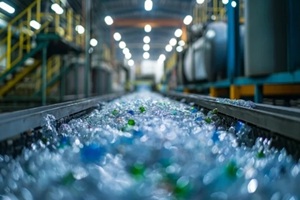
Ongoing progress in polymer science is opening the door to greater operational gains and significant environmental benefits. The development of PtM-CR-PII highlights an industry-wide trend toward environmentally responsible engineering, all without compromising the essential functionality of these plastic materials.
For professionals interested in keeping pace with these changes, joining PLASTICS, the Plastics Industry Association, offers valuable insights to leverage. Members receive the latest updates on materials science breakthroughs, access to leading recycling initiatives, and the opportunity to shape the direction of the industry’s future.
PLASTICS and the Future Leaders in Plastics (FLiP) Committee are devoted to supporting and encouraging the next generation of plastics leaders who will play a crucial role in the innovation, technology and future of the plastics industry. FLiP’s mission is to provide young professionals under the age of 40 the exposure, education and resources they need to build lifelong careers in plastics. Want to join? Want to get your employees involved? Email: flip@plasticsindustry.org
