
April 13, 2026
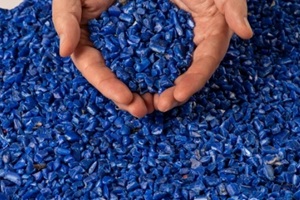
Plastics continue to serve as the foundation of global manufacturing, packaging, and consumer goods. Their light weight, strength, and versatility make them indispensable, yet their environmental legacy has created a growing need for materials that perform just as well with a lower ecological cost.
Hybrid plastics, which blend renewable, plant-based materials with conventional polymers, represent a measured shift toward that goal. They preserve the qualities that make plastics effective while lowering dependence on fossil resources and reducing overall environmental impact.
Global recycling systems struggle to manage the volume of plastic produced each year. Only a fraction of that material re-enters the production cycle, and even then, repeated processing gradually weakens polymer chains.
Regions lacking reliable collection infrastructure often experience even greater challenges, resulting in waste that escapes into the environment.
Alternatives such as paper or glass are often seen as greener options, yet their production requires greater energy inputs and usually results in increased carbon emissions.
Hybrid plastics sidestep those complications, introducing renewable feedstocks into existing systems without compromising performance or cost-effectiveness.
Hybrid plastics are created by integrating plant-based or other renewable materials into traditional polymer matrices. The proportions can be adjusted gradually, allowing producers to refine material properties while limiting disruption to established processes.
Existing extrusion, molding, and processing equipment typically requires minimal adaptation. Manufacturers can experiment with incremental renewable content, measure outcomes, and expand production once results meet expectations.
That adaptability makes hybrid technology an attractive option for companies seeking measurable environmental progress without significant capital commitments.
Adopting hybrid materials delivers advantages that go far past manufacturing, influencing sustainability, product lifespan, and material recovery long after production ends.
Incremental substitution of fossil-based inputs helps reduce greenhouse gas emissions while strengthening connections between manufacturing and renewable feedstock industries.
Agricultural byproducts, starches, and other biomass resources gain new economic value, supporting regional development and diversifying raw material supply chains.

Hybrid design also supports a circular economy philosophy. Plastics containing renewable content can circulate through existing recycling systems while offering a lower initial environmental cost.
Over time, that combination of durability, recyclability, and renewable inputs creates a feedback loop that keeps materials in productive use for longer.
Manufacturers seek materials that balance sustainability with reliability. Hybrid plastics satisfy these requirements because their composition can be adjusted to meet precise performance, durability, and environmental expectations.
Producers can select renewable feedstocks that blend seamlessly with the properties of the base polymer, achieving results that match or exceed conventional plastics in clarity, toughness, and stability.
| Property | Conventional Plastic | Hybrid Plastic (with renewable content) |
| Carbon Intensity (kg CO₂/kg material) | Higher | Lower |
| Tensile Strength | Comparable | Comparable |
| Processing Compatibility | High | High |
Hybrid plastics fit the increasing demand for environmentally responsible materials, giving companies more sustainable options without sacrificing performance. Consumers increasingly choose products that demonstrate reduced impact without compromising quality.
Companies adopting hybrid solutions position themselves to meet regulatory demands and public interest simultaneously, presenting tangible proof of environmental progress rather than distant pledges.
Supply chains also become more stable when renewable content is introduced. Diversifying feedstock sources reduces exposure to fluctuations in fossil fuel markets and supports long-term resilience.
Costs for hybrid plastics are expected to become more competitive over time, especially as the processing of renewable materials increases in scale and infrastructure.
The philosophy behind a circular economy relies on materials that remain useful throughout multiple life cycles.
Hybrid plastics extend that principle by improving the sustainability profile of materials already designed for durability and reuse. Recycling remains essential, but hybridization helps mitigate its limitations by reducing emissions at the production stage and enhancing recovery potential later.
Ongoing collaboration between producers, recyclers, and researchers continues to refine the performance of hybrid blends within established waste streams. Efforts focus on compatibility testing, lifecycle analysis, and end-of-life recovery models that integrate renewable content efficiently into circular systems.
Progress in sustainable materials often depends on realistic, incremental improvements rather than sweeping overhauls. Hybrid plastics represent that mindset in action.
The approach allows industries to adapt existing infrastructure while steadily increasing environmental performance. Manufacturers can begin with modest renewable content, evaluate outcomes, and scale their efforts based on results and market response.
Investment in research remains essential for further innovation. Continued refinement of renewable feedstocks, improved recyclability, and broader adoption across industries will determine how far hybrid technology can advance sustainability goals in the coming years.

Sustainability in plastics is not an all-or-nothing proposition. Hybrid materials demonstrate that meaningful change can occur through thoughtful adaptation rather than disruption. They unite strength with responsibility, offering a credible pathway toward a world where high-performance plastics coexist with environmental stewardship.
To stay informed on advances in hybrid materials and circular economy strategies, consider joining PLASTICS, the Plastics Industry Association. Membership offers access to research, advocacy resources, and sustainability initiatives that drive industry progress.
Through collective action, the industry can continue to strengthen hybrid technologies, reduce environmental impact, and create a future where strength and sustainability coexist.
PLASTICS and the Future Leaders in Plastics (FLiP) Committee are devoted to supporting and encouraging the next generation of plastics leaders who will play a crucial role in the innovation, technology and future of the plastics industry. FLiP’s mission is to provide young professionals under the age of 40 the exposure, education and resources they need to build lifelong careers in plastics. Want to join? Want to get your employees involved? Email: flip@plasticsindustry.org
