
June 16, 2026
| In This Article: Gain practical insight into how plastics contribute to advanced insulation, window framing, air barriers, and composite systems in improving overall building efficiency. |
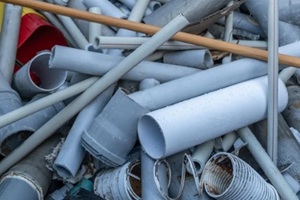
Higher performance demands are making plastics increasingly central to the design and construction of energy-efficient buildings. Polymer-based materials strengthen insulation systems, lower air leakage, and help stabilize interior temperatures across residential and commercial projects alike.
As material science has improved, plastics have become more capable and more practical for cutting operational energy demand. Elements such as insulation boards, window systems, air barriers, piping, roofing membranes, and structural panels all influence how efficiently a building performs over time.
Understanding where and how plastics improve building energy efficiency helps designers, contractors, and property owners make informed decisions about a building’s long-term energy performance.
Across the world, buildings account for a significant share of total energy demand and the associated emissions. Heating and cooling systems account for a large share of that consumption, and envelope performance directly affects how hard those systems must work.
Your material selection determines how effectively a building retains conditioned air and maintains comfort. High R-value insulation, low-conductivity framing components, and airtight assemblies reduce heat transfer and limit wasted energy year after year. Operational efficiency depends heavily on these design choices.
Updated energy codes, net-zero targets, and voluntary programs such as LEED and Passive House continue to raise performance benchmarks. Compliance increasingly requires careful evaluation of building materials and their contribution to overall thermal performance.
Plastic insulation materials form the foundation of modern thermal control strategies. Common options include EPS and XPS foam insulation, rigid polyurethane and polyisocyanurate boards, and spray polyurethane foam systems.
High thermal resistance relative to thickness allows these materials to perform efficiently in walls, roofs, foundations, and floors. Limited cavity depth in many assemblies makes insulation efficiency per inch especially important.
| Insulation Type | Moisture Resistance | Compressive Strength | Long-Term R-Value Stability |
| EPS | Moderate | Moderate | Strong when protected |
| XPS | High | High | Good with proper detailing |
| PIR/PUR | High | Moderate | Excellent in stable systems |
| SPF | High; air sealing | Varies | Strong with correct installation |
Well-installed polyurethane insulation in roof assemblies has demonstrated significant reductions in heating and cooling loads. Lifecycle analyses repeatedly show that insulation saves many times the energy required to manufacture it, reinforcing its value in high-performance construction.
Windows are often among the most difficult parts of a structure to manage when effective thermal control is the goal.
PVC window frames offer low thermal conductivity and multi-chamber profiles that slow the transfer of conductive heat. Dimensional stability over time supports consistent performance and lowers the potential for air leakage.
Polycarbonate and acrylic glazing systems serve specialized applications such as skylights and daylighting features. Reduced weight and improved impact resistance make these materials attractive where structural constraints exist, while thermal performance improvements contribute to lower heat gain and loss.
Polymer-based gaskets, seals, and weatherstripping around openings further reduce infiltration. Even small reductions in uncontrolled air movement can noticeably improve overall envelope efficiency.
A building envelope forms the outer barrier that separates conditioned interior space from the exterior environment. Airtight construction plays a decisive role in determining energy demand.
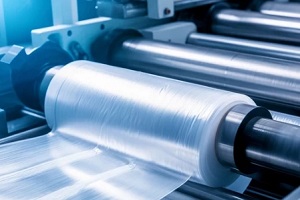
Polyethylene and polypropylene housewraps, vapor barriers, and air barrier membranes limit moisture migration and prevent uncontrolled air leakage. Despite their thin profile, these materials significantly affect insulation performance and heating and cooling loads.
Blower door testing routinely confirms how minor discontinuities in air barriers can increase energy use. Proper detailing and installation determine how effectively these systems perform in practice.
Thermal bridging occurs when heat moves through parts of a structure that cut through the insulation rather than being blocked by it. Steel framing members, balcony connections, and metal fasteners frequently create these conductive pathways.
Engineered plastic and composite thermal breaks interrupt direct heat flow. Curtain wall anchors, balcony isolation elements, and specialized fasteners increasingly incorporate polymer components to reduce localized energy loss.
Replacing certain metal connectors with engineered alternatives can meaningfully lower conductive heat transfer through the envelope, particularly in high-performance commercial buildings.
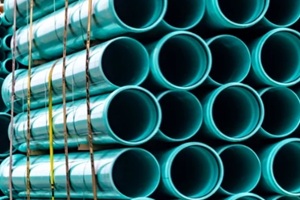
Plastic piping systems such as PEX, CPVC, and PVC exhibit lower thermal conductivity than metal alternatives. Reduced heat loss in hot-water distribution and radiant-heating loops improves system efficiency.
PEX tubing in radiant floor systems maintains water temperature more consistently, which can shorten boiler runtime. Polymer-based duct components and insulated plenums also limit energy loss within air distribution systems.
Lightweight piping reduces installation complexity and enables flexible routing, improving overall mechanical system layout and performance.
Single-ply roofing membranes, including TPO and PVC, support cool roof strategies through high solar reflectivity. Lower surface temperatures translate into reduced cooling demand in warmer climates.
Insulated plastic cladding panels and composite rain-screen assemblies add exterior thermal resistance while protecting structural elements.
When integrated with continuous insulation and air barrier systems, these components contribute to measurable improvements in whole-building energy modeling results.
Structural insulated panels combine rigid foam cores with structural sheathing layers. Continuous insulation in these assemblies reduces thermal bridging compared to traditional framing approaches.
Insulated concrete forms utilize interlocking EPS blocks as permanent formwork. Once concrete sets, the foam remains in place, delivering consistent insulation on both sides of the wall. Projects using SIPs and ICFs frequently achieve energy performance levels that exceed baseline code requirements.
High-performance polymer materials contribute to credits within LEED, BREEAM, Passive House, and ENERGY STAR frameworks. Improved insulation levels, reduced air leakage, and efficient glazing systems support energy modeling targets required for certification.
Lifecycle assessment increasingly informs material evaluation. Operational energy savings over decades are weighed against embodied carbon impacts, and many projects find long-term efficiency gains offset initial manufacturing energy.
Most plastic building materials rely on petroleum-derived feedstocks. End-of-life recovery and recycling remain active areas of industry development, and material transparency continues to gain attention among specifiers.
Operational energy reductions over a service life that can extend up to 50 years or more frequently outweigh the embodied energy associated with production. Recycled content integration, take-back programs, and bio-based polymer research are gradually improving environmental performance across the sector.
Aerogel-enhanced foam insulation, phase-change materials embedded in polymer matrices, and adaptive vapor-control membranes are emerging technologies. Research continues to improve material performance, supporting greater efficiency and lower environmental impact.
Stricter energy codes and net-zero building mandates are expected to increase demand for advanced insulation and envelope systems. The combined work of material scientists, architects, and engineers is helping raise the bar for building performance year after year.
Polymer-based materials influence nearly every component of a building’s thermal envelope and mechanical systems. Insulation, glazing, air barriers, piping, and structural assemblies all contribute to lower operational energy use when properly specified and installed.
Staying informed about innovative building materials, emerging regulatory developments, and the latest sustainability initiatives strengthens decision-making across the industry. Becoming part of PLASTICS, the Plastics Industry Association, gives companies access to advocacy resources, a regulatory perspective, and a broader range of industry support.
PLASTICS and the Future Leaders in Plastics (FLiP) Committee are devoted to supporting and encouraging the next generation of plastics leaders who will play a crucial role in the innovation, technology and future of the plastics industry. FLiP’s mission is to provide young professionals under the age of 40 the exposure, education and resources they need to build lifelong careers in plastics. Want to join? Want to get your employees involved? Email: flip@plasticsindustry.org
